Confidential / Founder Brief
A curiosity engine for every 13-year-old.

"I want to give my son and two girls the advice to explore all of their options. By 2032, my son will be 13 — the perfect age to use the app."

— The founding promise

"Kids will have had opportunities they would never have dreamt of having. Companies will have a workforce that played their experience 10 years before they end up working in that industry."

— The bigger picture

Free access drives school density → density attracts brands → brand revenue funds expansion → expansion increases density. Each stage compounds the next.

— The flywheel

Restricted access

This repository is shared by invitation only. Enter the access password to continue.
© Navito · All rights reserved
Internal Knowledge Repository
0 chapters have been updated since the Executive Summary was last reviewed. Consider refreshing it.
Overview

Executive Summary

Foundation

Vision & Purpose

Navito exists to give every child on the planet an equal chance to explore their future — regardless of postcode, family background, or the school they happen to attend.

The belief at the centre of Navito is simple: the gap between a child's potential and their eventual outcomes is largely determined not by talent or ambition, but by exposure. And exposure, today, is almost entirely a function of luck.

Some children grow up surrounded by professionals across many industries. Most don't. Their world of possible futures is bounded by proximity — what their parents do, what their neighbourhood looks like, what their school can afford to show them.

350M+
Global 13–15 year olds. Navito's primary audience.
5%
Realistic penetration target by 2032.
2032
Year the founder's son turns 13. The personal deadline.
$0
Cost to every school and student. Always.

The core belief

Children cannot make informed choices about futures they have never been introduced to. The problem is not that they lack drive. It is that their curiosity has never been activated. Nobody showed them the green hydrogen engineer, the logistics operations manager, the data centre architect. Nobody made those careers feel real, interesting, and within reach.

Navito is a curiosity engine. Its purpose is not to guide children toward predetermined outcomes, but to expand the range of what they believe is possible — and to do so at the age when those beliefs are still forming.

The level playing field

The founding ambition is a level playing field — not equal outcomes, which cannot be guaranteed, but equal access to the information and experience that makes informed choices possible. A teenager in an underfunded rural school should have the same opportunity to discover green hydrogen or advanced logistics as a teenager at a well-resourced private school. That is what Navito is building.

Foundation

The Story

Navito did not begin as a market analysis. It began with a career aptitude test and a fourteen-year-old who answered it honestly — and was handed a list that closed more doors than it opened.

The aptitude test

As a young person, the founder sat down to complete a career aptitude test. He answered that he enjoyed sports and working with people. The test returned its verdict: physiotherapist. Sports marketer. Coach. He locked in his thinking early, never seriously explored beyond those suggestions, and moved on.

He did not become any of those things. He became a founder — three times over. But the question that stayed with him was not what he became. It was what he never considered. What professions, industries, and possibilities existed that he never encountered because no test, no teacher, and no career day ever showed them to him.

A personal deadline

The question became more urgent when he had children. A son and two daughters. By 2032, his son will be thirteen — exactly the target age for Navito's core user. He wants to build the solution his own children will one day use. He wants to tell them, with confidence backed by a real product, that their options are wider than they can currently imagine.

"I want to give my son and two girls the advice to explore all of their options. I'd like to create that solution for them. By 2032, my son will be 13 — the perfect age to use the app."

Why the model is what it is

The original conception was a school-facing product — a platform institutions would purchase. That model was abandoned after conversations with experienced EdTech founders revealed the structural problem: K-12 procurement is slow, political, and budget-constrained. The schools that most need the product are the ones least able to pay for it.

The insight came from looking at the opposite side of the equation: ask brands — who have a genuine commercial problem and a budget to match — to fund a product that schools and students receive free. A comparable model in higher education is The Forage. Navito applies the same logic to K-12, at a younger age, with a fundamentally more engaging delivery mechanism.

The founding insight

Through work in EdTech, the founder was repeatedly exposed to projects and programmes trying to fix career navigation. The pattern he recognised — that most existing solutions miss — is that the problem is not information. Career information exists in abundance. The problem is curiosity. It is hard for children to make choices when they have never encountered the job. When the career is entirely abstract to them. Navito is, at its core, a curiosity engine.

Foundation

Why Now

Three forces are converging simultaneously. The window where they intersect is open — and it is not permanent.

December 2025
Australia enforces the world's first nationwide social media ban for under-16s. Passed with 77% public support.
November 2025
EU Parliament votes in favour of a minimum age of 16 across all platforms.
February 2026
Spain, France, Denmark, Portugal, Malaysia, and the UK pass or formally propose equivalent legislation.
April 2026
30+ countries in active legislative process. 19 US states with enacted or proposed social media legislation for minors.
July 2025
US youth unemployment reaches 10.8% — highest non-pandemic level in a decade (BLS).

Force 1 — Regulatory collapse of social media

What began as a single country's response to a youth mental health crisis has become a coordinated international regulatory movement. The EU minimum age vote, national proposals across Europe and Asia-Pacific, and US state-level legislation represent a political consensus that is not reversing. Brand campaigns planned 12-18 months ahead are suddenly legally uncertain.

Force 2 — Commercial breakdown of youth digital marketing

Cost-per-acquisition for reaching youth on social platforms has risen over 200% in three years. 84% of Gen Z skip social ads entirely. GDPR-K and COPPA have made behavioural targeting of minors increasingly illegal, removing the data infrastructure that made social advertising viable. The channel was broken commercially, legally, and ethically before any government acted.

Force 3 — The youth career crisis deepening

4.3 million young Americans are classified as opportunity youth. The youth NEET rate is at 12% and rising. The evidence linking early career exposure to adult outcomes is robust and increasingly mainstream. The intervention is proven. A scalable, free delivery mechanism does not yet exist.

The window

The first platform to establish meaningful school density — before the regulatory void is filled by a competitor — will be extremely difficult to displace. Schools do not switch platforms. The network effect compounds. The window is open. It will not stay open indefinitely.

The Problem

The Regulatory Cliff.

Brands are being legislated off the only channel they had to reach teenagers, with $11.5B in spend and nowhere compliant to put it.

200%+
Rise in youth CPA on social platforms in 3 years
30+
Countries legislating social media restrictions for under-16s
84%
Of Gen Z skip or fast-forward social ads entirely
<5%
Global ad budgets going to gaming (Dentsu 2025)

The regulatory side

Australia's December 2025 ban — passed with 77% public support — was a watershed. What followed was coordinated: EU minimum age vote, waves of national proposals across Europe and Asia-Pacific, US state-level legislation. This is a political consensus that is not reversing.

The commercial side

The economics were already broken before legislation arrived. The 200% rise in CPA reflects algorithm saturation, iOS privacy changes, and documented decline in young people's engagement with social advertising. The ad spend is real. The reach is not.

The gaming alternative — and its limits

Gaming is the obvious alternative. The IAB projects in-game advertising reaching $11.5B in the US alone by 2027. Yet gaming captures less than 5% of global ad budgets. The barriers are consistent: unverified demographics, fragmented measurement, open environments that expose brands to reputational risk. Roblox, Minecraft, and Fortnite are under growing regulatory scrutiny. Navito eliminates every barrier.

The industries most affected

The brands with the most acute version of this problem are in industries young people do not currently consider: data centres, green hydrogen, advanced logistics, financial services, healthcare, government and military recruitment. These sectors need a workforce in a decade that is currently 14 years old and has no idea those careers exist.

The Problem

The gap is structural, and no one is filling it.

The career exposure gap is not an information problem. Young people do not lack facts about careers. They lack curiosity — because nobody has made the right careers feel real, interesting, and within reach.

4.3M
US opportunity youth — disconnected from school and work
12%
US NEET rate, rising (2024)
$31K
Less earned over 14 years vs connected peers
16
Age at which career uncertainty locks in lower lifetime earnings

The proximity trap

A teenager whose parent is a surgeon understands surgery as a viable path. One whose parent drives a bus may never consider biotech. The gap is not talent. It is access. The 2025 OECD report makes this structural inequality explicit: social background is now a stronger predictor of educational ambition than academic performance.

The consequence

The 4.3 million opportunity youth in the US are not an anomaly. They are the predictable outcome of a system in which career exposure is distributed by privilege, not potential. Independent analysis puts the lifetime cost per disconnected young person in the hundreds of thousands of dollars in lost productivity and increased government expenditure.

Why existing tools don't solve it

All existing career guidance tools share a common failure mode: they are passive. They provide information. They do not generate curiosity. The intervention that works — as the British Cohort Study and NEFELE research demonstrate — is interactive, repeated, and gamified. That experience, at scale and for free, does not yet exist. Navito is building it.

Research

Evidence & Research

The case for Navito rests on a substantial body of evidence across three areas: the impact of career exposure on youth outcomes, the effectiveness of gamified delivery, and the market dynamics driving brand reallocation away from social media.

Career exposure and adult outcomes

British Cohort Study — National Child Development Study (17,000 individuals tracked from birth)

A statistically significant 0.8% wage premium per external career talk at age 14–15, rising to 1.6% for encounters rated "very helpful." The effect is measurable at age 26. One of the longest-running longitudinal datasets in social science. Navito delivers repeated, interactive, gamified employer encounters — not a single passive talk.

OECD State of Global Teenage Career Preparation, 2025 — PISA data from 79 countries

Career uncertainty among teenagers is at a historic high globally. Students with uncertain occupational aspirations at 16 earn significantly less a decade later. Social background is now a stronger predictor of educational ambition than academic performance.

Longitudinal research on opportunity youth — US Joint Economic Committee

Young people classified as opportunity youth earn $31,000 less than connected peers over the first 14 years of their working lives. Early career exposure is among the strongest upstream predictors of avoiding disconnection entirely.

OECD employer-linked activity research

Young people who participate in four or more employer-linked activities during adolescence earn 5–7% more than peers with no employer engagement by age 26. In a Madrid study, 66% of young adults with no career exposure felt unprepared for adult life — versus 33% among those with meaningful encounters.

The NEET evidence

PwC Youth Employment Index, 2025 / Bureau of Labor Statistics, July 2025

In the UK, 1 in 8 young people are NEET — the highest level in a decade — at an estimated cost to the economy of up to £26 billion annually. In the US, youth unemployment reached 10.8% in July 2025, its highest non-pandemic level.

Education and Employers research — career exposure and NEET likelihood

Teenagers with four or more meaningful career encounters are 86% less likely to become NEET by age 19. The mechanism is aspiration formation: young people who can picture themselves in a career take the educational steps required to pursue it.

Gamification and learning effectiveness

NEFELE Research Model — digital career games vs. static content

The NEFELE model demonstrates a "very large" effect size (g = 1.095) for digital career games over static career content. An effect size above 0.8 is considered large in social science; 1.095 is exceptional. Gamified career exploration is dramatically more effective at generating aspiration and knowledge change.

Market and regulatory evidence

IAB "Changing the Game" Report, March 2024 / Dentsu Global Ad Spend Report, 2025

US in-game advertising projected to grow from $8.5B in 2024 to $11.5B by 2027. Gaming captures less than 5% of global ad budgets (Dentsu, 2025). 86% of marketers say gaming is brand safe — the gap between intent and spend is entirely attributable to structural barriers Navito eliminates.

360 Research Reports, 2024

Global K-12 educational games market projected to reach $27.9B by 2030. Cost-per-acquisition for reaching youth on social platforms has risen over 200% in three years.

Research gaps — what Navito must generate

The existing research establishes the case convincingly. What it does not yet provide is direct evidence on the Navito model specifically. The pilot phase is therefore both commercial and an evidence-generation exercise. Pilots will produce data on engagement time, aspiration change, and conversion to physical opportunities that underpins the Series A narrative and government partnership discussions.

Product

Pokémon Go meets LinkedIn.

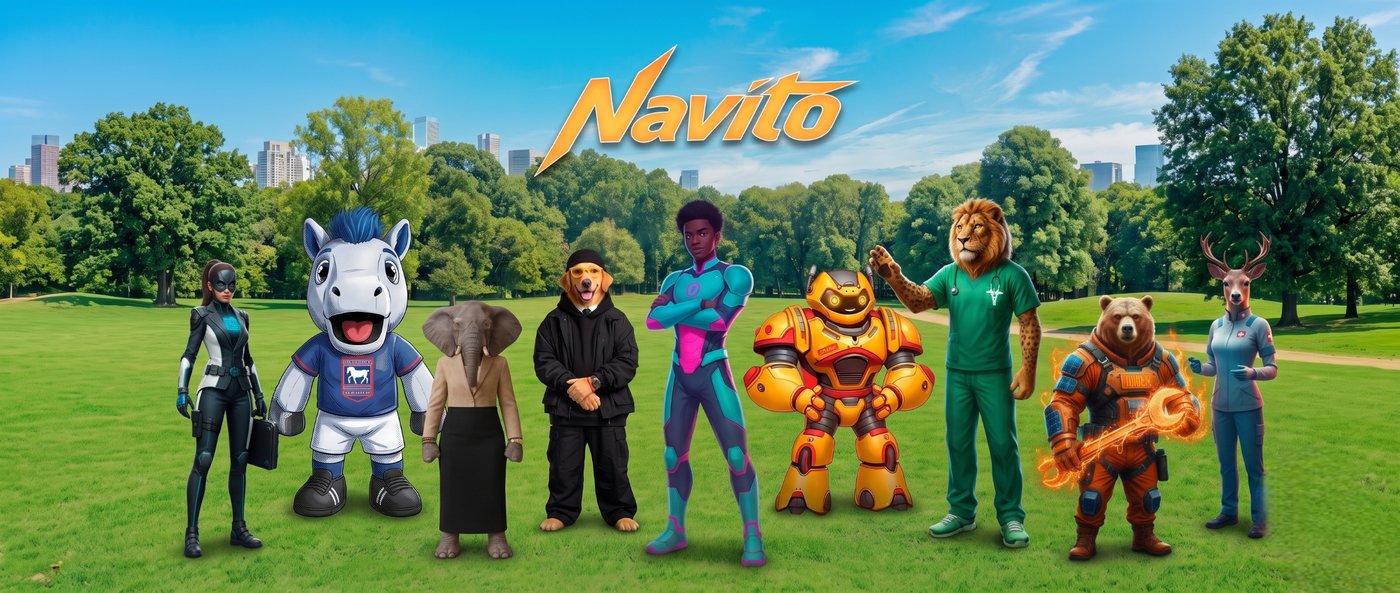
Navito places branded, AI-powered 3D characters inside schools using AR. Students navigate to a character on a geospatial map, tap in, and an AI guide walks them through real careers at that organisation.

1. Brands pay

  • Verified youth demographics
  • No ad auctions
  • GDPR-K compliant
  • Ethical brand positioning
  • Deep engagement analytics

2. Schools receive it free

  • No procurement friction
  • Scale unlocks instantly
  • Zero curriculum change required
  • School-endorsed, safe environment
  • Zero cost, forever

3. Students explore 10,000+ careers

  • Gamified AR, AI-guided, parent-approved
  • Physical opportunity bridge: site visits, job shadows
  • No social feed, no data exploitation, no ads
  • Content from O*NET, ESCO, and brand partners

Why this model works

Every competitor in the careers guidance space charges schools. Schools pay. This is the universal model and the universal constraint. Navito inverts it. By making schools and students free recipients, Navito removes the single largest barrier to scale in EdTech — institutional budget friction.

Free access drives school density → density attracts brands → brand revenue funds expansion → expansion increases density. Each stage compounds the next.

The defensible moat

The network is the moat. The first platform to achieve meaningful school density in a market becomes extremely difficult to displace. Schools do not switch platforms. Brand relationships, government partnerships, and school trust take years to build. They cannot be replicated by a late entrant at speed.

Product

Product Detail

A walkthrough of the current prototype, the planned full product, and the key design decisions behind both.

Current prototype — April 2026

A functional clickable prototype is live on iOS and Android. The app onboards a new user, displays a geospatial map populated with 3D characters, responds to the user's physical movement (in-app character walks as user walks), allows characters to be tapped to unlock career narrative content, and includes mini-game interactions. Core AR navigation, character rendering, and geospatial delivery are technically validated.

The full student experience

A student opens Navito, creates a profile, and sees a map of their school and surroundings with characters pinned at locations. As the student physically moves, their avatar moves. When they reach a character, they tap to unlock. The character introduces itself — a DHL logistics engineer, an HP data scientist, a green hydrogen chemist — tells a short narrative, and the student plays mini-games tied to that career. Success unlocks additional content and the physical opportunity bridge: site visits, job shadow requests, direct connections.

Content production

Career character content draws on O*NET (US occupational database) and ESCO (European equivalent), supplemented by brand-supplied materials. Production uses a combination of 3D artists, AI generation pipelines, and brand asset integration including mascots where appropriate. The platform gets better as it scales.

The safety architecture

The decision to deploy inside schools rather than via consumer app stores was a safety decision, not a commercial one. GDPR-K and COPPA compliant by design. No social feed, no peer comparison, no behavioural targeting, no data exploitation. The product is designed for use during designated school sessions — career days, form periods, advisory time — not as an always-on background app.

Parent and guardian feedback loop

A mechanism by which parents and guardians receive insight into their child's career exploration — a dashboard or reporting system — is a meaningful part of the long-term product vision. The exact workflow is to be designed carefully, with privacy and simplicity as the primary constraints. This is an MVP-phase feature, not POC.

The phone-in-schools risk

Deployment of a mobile game inside schools operates in the context of active debate about phone use in educational settings. Navito's mitigation: supervised, session-based deployment under school control. The pilots will generate evidence to distinguish Navito clearly from social and distraction use cases.

Product

Pricing Model

Revenue comes entirely from brand partners on annual retainers. Schools and students pay nothing, always. The freemium structure drives school density; the paid tiers drive revenue.

FreeProPremiumEnterprise
Price$0/month$99/month$999/monthCustom
AgreementMonthlyAnnualAnnualAnnual
Characters111Multiple
Geolocations101001,0001,000+
Career ContentGeneric, publicGeneric, publicOrganisation-specificCustom insights
BrandingLogo & coloursLogo & coloursFull brand experienceFull brand experience
AnalyticsNoneBasic usageFull engagement analyticsAdvanced + API
SupportSelf-serveEmailPriorityDedicated manager
OnboardingSelf-serveSelf-serveGuided setupWhite-glove

Why freemium

The free tier is a deliberate strategic instrument. A brand deploying a free character in 10 school locations generates proof of concept and contributes to platform density. When those engagements generate measurable data, the upgrade path to Pro or Premium becomes commercially rational. Annual retainer agreements create predictable, recurring revenue that compounds quarterly.

Market

$11.5B reallocating, and we're built to receive it.

Brands are being pushed out of social as legislation tightens. K-12 EdTech gamification is compounding toward a multi-billion-dollar category. Navito sits exactly where the two markets intersect.

$27.9B
Global educational games market by 2030 (360 Research Reports)
$11.5B
US in-game ad spend forecast by 2027 (IAB)
30+
Countries restricting youth social media while K-12 EdTech grows unchallenged
86%
Of marketers say gaming is brand-safe — the post-social channel is ready

Global K-12 educational games market growth

Priority brand sectors

Data centres, green hydrogen, advanced logistics, financial services, healthcare, and government/military recruitment all share a structural challenge: they are invisible to young people, yet will need massive new workforces within a decade. Navito offers the earliest possible point of influence — before any competitor exists in the space.

The government data opportunity

At scale, Navito accumulates real-time data on what careers young people are exploring and how patterns vary by geography and demography. This creates a meaningful government partnership model — sharing workforce pipeline data and enabling governments to strategically surface career pathways where they need to build early pipeline.

Market

The Competitive Moat.

No free, brand-funded career exploration and navigation platform exists at scale for kids and parents. Current tools are fragmented, paid, or closed. Navito delivers nationwide at zero cost to families and schools.

PlatformModelStrengthCritical Weakness
YouScience · Pathful · Unifrog · XelloSchool paysK-12 integrationRequires budget schools don't have
Roblox · Open gaming platformsAd-supportedScaleUnverified demographics · regulatory risk
TikTok · Instagram · SocialAd-supportedReachBeing legislated off the channel
NavitoBrand pays · school freeVerified · closed · compliantNo structural weakness

The regulatory opportunity

Social media is being legislated off the youth channel in 30+ countries. This is a short, one-time window to become the default youth channel before anyone else moves.

No competition at scale

No free, brand-funded career exploration platform exists at scale. Current tools are fragmented, paid, or closed. Navito delivers nationwide at zero cost to families and schools.

Exploration, then experience

Built to the strictest youth-privacy frameworks from day one. Exploration first, physical experiences second: job-shadowing, apprenticeships, and school-verified placements, delivered by brands the student already trusts.

Execution

The Team

Navito is built on a founding philosophy: exceptional people with real ownership at the earliest stage execute with a different level of commitment. Equity goes to builders.

Founder & Chief Evangelist
Mike

Serial founder — three companies. Background spans EdTech, AI, and enterprise technology. Strength in business development, network-led sales, and closing the early enterprise clients that catalyse a platform's commercial momentum. US citizen with active networks across the US, European, and South African markets. Driving active conversations with DHL, HP, FIFA, and Accenture. Full-time post-transition. Personal motivation: his son will be thirteen in 2032 — the target Navito user.

Strategic Partner
Roo Stevens

Capital, commercial network, and pattern recognition from multiple cycles of building and backing businesses. Preference for meaningful capital upfront over incremental raises. Network spans the UK sports and business establishment. His instinct — build quietly, build well, then launch with impact — is the right one.

CEO / Co-Founder — To Be Hired
Sought: Tried and tested operator

Navito needs a co-founder with the operational and strategic skills to set the company up for scale — someone who has taken a technology company from prototype through to profitable business. A co-founder, not an employee. Comes in with ownership and conviction.

CTO — To Be Hired
Sought: Gaming veteran

The most urgent technical hire. Responsible for the full product build: 3D character engine, geospatial mapping and AR delivery layer, AI-powered career guidance system, and brand portal. Compensated with below-market salary plus meaningful equity from the option pool.

Execution

The path to $28M+ ARR.

Stealth build in 2026. Pilot across 150,000+ students. Full launch in 2028. By 2030, 10,000+ characters deployed and cash-flow positive. Acquisition-ready by 2032.

Where we are — April 2026

Functional clickable prototype live on iOS and Android. Core AR navigation, character rendering, and geospatial delivery technically validated. Active commercial conversations with DHL, HP, FIFA, and Accenture. The foundation for first sales exists.

The stealth strategy

Build quietly, build well, then launch with impact. Pilots during the build phase serve an internal purpose: they test assumptions, improve the product, and generate evidence. They are not public proof points. The retainer model means that once revenue starts, it is predictable and compounding.

PhaseTimelineSchoolsStudentsPartnersARR
Stealth BuildNow – Nov 2026Pilot onlyDemo readyConversations activePre-revenue
Pilot LaunchNov 2026 – Nov 2027500+150,000+100 paid$100K
Full Launch20282,000+600,000+500+$500K
Growth202910,000+3,000,000+5,000+$5M+
Scale2030Global10M+10,000+Cash-flow positive
Exit-Ready2032$28M+ ARR
Execution

Risks & Mitigations

An honest internal assessment of the risks that could slow or derail Navito, and what is being done about each.

Product & Technology

High Phone use in schools. Deployment of a mobile game inside schools conflicts with phone-restriction policies being adopted globally. Mitigation: Structured session-based deployment under school supervision. Pilots generate evidence to distinguish Navito from social/distraction use cases. This is the most important risk to address early.

Medium CTO hire quality and timeline. The full technical build depends on finding the right gaming veteran. Mitigation: Equity-led compensation, Roo's network, and Mike's track record in closing exceptional early hires.

Commercial

Medium Brand pipeline conversion. Current conversations (DHL, HP, FIFA, Accenture) are unsigned. First revenue is not guaranteed before the pilot launch. Mitigation: Retainer model means once a brand commits, revenue is predictable. Focus on closing one anchor brand early as proof point for others.

Lower School adoption friction. Even with a free product, schools require trust-building, safeguarding reviews, and administrative approval. Mitigation: Target early adopter schools with progressive leadership; use pilot schools as reference cases for broader rollout.

Strategic

Medium Regulatory environment for youth data. GDPR-K and COPPA are tightening. Any perception that Navito handles student data inappropriately would be fatal. Mitigation: GDPR-K/COPPA compliance built in from day one; $70K legal allocation for proper audit; no behavioural targeting architecture whatsoever.

Lower Well-funded competitor enters the space. The regulatory void could attract a large tech company or agency holding group. Mitigation: First-mover advantage is the product; school density is the moat; brand relationships are not replicable by a late entrant at speed.

Lower Investor confidence during stealth phase. Building quietly with no public traction requires investors to trust the process. Mitigation: Clear milestone structure; transparent financial reporting; quality of brand pipeline as ongoing proof of commercial viability.

Investment

$1M survives. $2M compounds.

Subscription revenue from brand partners on annual retainers. Cash flow positive H2 2029. Cumulative profitability H1 2030. Two scenarios modelled.

Scenario A
$1M
raise — Survivable. Sequential execution. Commercial follows product.
  • CTO hired. MVP built.
  • Tight runway. Pilot intact, but delayed.
  • Series A approached under cash pressure.
  • Cash-flow positive in H2 2029.
H1 2032 Net Cash~$12M
Scenario B · Recommended
$2M
raise — Commercial + Product in parallel. Navito sets the pace, not the cash runway.
  • Full team: CTO and Sales Director hired early.
  • Pilot, product, and brand partners run concurrently.
  • Series A from proven traction, optional not forced.
  • Velocity compounds every quarter through 2032.
H1 2032 Net Cash$25M+

Detailed projections (with $2M investment)

PeriodRevenueExpensesNetCumulative
H1 2026$54K-$105K-$51K-$51K
H2 2026$129K-$141K-$12K-$63K
H1 2027$203K-$695K-$492K-$555K
H2 2027$368K-$749K-$381K-$936K
H1 2028$532K-$1.28M-$748K-$1.68M
H2 2028$1.01M-$1.30M-$289K-$1.97M
H1 2029$1.50M-$2.29M-$793K-$2.76M
H2 2029$3.74M-$2.34M+$1.4M-$1.36M
H1 2030 ✓$5.98M-$3.32M+$2.66M+$1.3M
H1 2032$31.08M-$5.27M+$25.8M+$58.5M
Investment

Investment Structure

USD 2,000,000 pre-seed. One or two anchor investors. Structured for a clean Series A in 2027. Terms available upon request and discussed directly with prospective investors.

$2M
Pre-seed raise. Terms available upon request.
36mo
Runway to Series A from strength, not pressure.
$3M
Series A target, 2027. Based on pilot proof points.
2030
Profitability target (H1).

The HoldCo structure

For anchor investors taking a large early position, the stake is held via a Special Purpose Vehicle or holding entity rather than directly in the Navito operating company. The operating cap table remains clean for future institutional investors. Decision-making moves faster at the operating level. The anchor investor retains full economic exposure and financial rights. The investor gets the economics. The company gets the agility.

Dilution mechanics

At Series A and beyond, anchor investors dilute at an accelerated rate relative to the founding team. This is the agreed trade-off for the largest equity position at the most undervalued stage. Incentives are fully aligned — both parties benefit from the highest possible exit valuation.

Use of proceeds

PriorityAllocationWhat It Unlocks
Founder transition~$60KMike full-time from day one. Existing obligations handed over.
CTO hire~$150KGaming veteran recruited. Entire technical roadmap unlocked.
Product build~$200K3D engine, geospatial map, AR layer, AI. POC to MVP by Nov 2026.
100 career characters~$120KThe inventory brand partners buy access to.
Commercial launch~$200KFirst paid brand partners. 500 schools as pilot audience.
Legal & compliance~$70KHoldCo/SPV, GDPR-K/COPPA audit, IP protection.
Working capital~$1.2M36-month runway. Series A from strength.
Investment

Built for Acquisition.

Verified youth demographic data. School distribution at scale. GDPR-K compliance. ARR compounding past $28M. Four acquirer categories have a strategic reason to buy. Target exit window: 2032.

Ad Holding Groups
Compliant youth engagement, packaged.
WPPPublicisDentsu

Adds a post-social, regulatory-safe channel to the brand-services portfolio.

HR & Talent Platforms
Top-of-funnel talent pipeline.
LinkedInIndeed

Captures teens years before the resume — the demographic LinkedIn can't legally reach today.

Gaming Platforms
Regulatory-safe youth advertising.
RobloxEpic Games

A compliance-native alternative to open-world youth advertising that's under pressure.

EdTech Consolidators
The under-18 category, before competitors.
CheggCourseraKahoot

A category-defining K-12 acquisition that few incumbents can build organically.

The anchor investor in this round gets the largest equity position at the earliest, most undervalued stage, ahead of an irreversible regulatory shift.

Vision

The Bigger Picture

If everything goes right, the world looks different in 2032 in three specific ways — for young people, for companies, and for governments.

For young people

A generation will have had access to career encounters they would never have had otherwise. Not because their school could afford it, or because their parents had the right connections, but because a free game on their phone put a DHL engineer, a green hydrogen chemist, and a data scientist into their world at thirteen. Some will end up working in those industries. Some will work for those exact companies. Many will simply know that their options were wider than they thought — and that knowledge, accumulated early, changes the decisions they make for decades.

The founder's son will be thirteen in 2032. When he opens Navito that year, the hope is that he feels something specific: confidence. Not certainty — teenagers should not be certain. But the grounded confidence that comes from having genuinely explored. From knowing his options are larger than he could currently imagine.

For companies

The brands that established a Navito presence in 2027 will, by 2035, have a workforce that grew up playing their experience. The pipeline between a fourteen-year-old's curiosity and an adult's career choice will have been shortened, personalised, and made visible in ways that no previous generation of marketers could access.

For governments

Navito will have accumulated something no government currently has: real-time data on what young people think about the future of work, what industries are capturing their curiosity, and where the gaps are between aspiration and workforce need. In partnership with governments, Navito will surface specific career pathways — teachers, healthcare workers, engineers, green energy specialists — where policy requires early pipeline building.

"Kids will have had opportunities they would never have dreamt of having. Companies will have a workforce that played their experience 10 years before they end up either working in that industry or working for that company."

This is not a modest ambition. It is the honest answer to what Navito is trying to achieve. A level playing field. For every child.

Gameplay

Game Overview

Navito is a narrative-based, geospatial career discovery game. Students physically move through their school and surroundings, encountering 3D career characters on a live map. Every interaction is a story — told through AI-guided characters, mini-games, and evolving brand experiences.

Navito splash screen — the app loads into a cinematic intro

The Navito protagonist — the student's in-game avatar hero

Narrative-based learning through storytelling

Navito is not a quiz. It is not a database. It is a game in which careers are delivered as stories — told by characters that students encounter in the real world. The learning is embedded in the narrative. A student does not read about cybersecurity; they meet Foxwall, a cybersecurity analyst, learn his story, play his mini-games, and by the end understand what the career feels like from the inside.

This narrative structure mirrors how great games teach — through immersion, not instruction. The student is not a passive recipient of information. They are an active participant in an unfolding story. Each character they meet, each mini-game they complete, each evolution they unlock adds a chapter to their personal career discovery journey.

The Navito character — the in-game guide

Every student's journey is guided by the Navito character — their in-app tour guide, instruction assistant, and companion throughout the experience. The Navito character introduces new mechanics, celebrates achievements, and gently nudges students toward new career encounters. Think of it as a trusted, always-available guide who knows the student's interests and helps them navigate an ever-expanding world.

The live geospatial map — students navigate a 3D rendered environment to reach career characters

Core game elements

Exploration layer

  • Live geospatial map (Mapbox-powered)
  • 3D characters pinned at real-world locations
  • Student avatar moves as the student moves
  • Characters visible at proximity range
  • Compass + navigation UI

Progression layer

  • XP earned through every interaction
  • Badges collected per career completed
  • Character evolutions unlock branded content
  • Collection mechanics drive return visits
  • AI suggests next characters based on profile
Gameplay

Gameplay Mechanics

A full walkthrough of the student experience — from first open to branded character evolution, social sharing, and the physical opportunity bridge.

Step 1 — Onboarding: building the student profile

When a student opens Navito for the first time, they are guided through a character-led onboarding flow. They build their own avatar, choosing what their in-game character looks like. They then answer a series of questions — delivered as a conversation, not a form — that build their initial profile. This profile feeds the AI recommendation engine and personalises their career discovery journey from day one.

CategoryQuestions / Data Points
IdentityNickname only (no real name). Avatar creation: appearance, style.
InterestsWhat do you enjoy doing? What topics excite you?
ValuesWhat matters most to you in a future career?
SubjectsWhich school subjects do you enjoy or excel at?
HobbiesWhat do you do outside school?
DreamsWhat does your dream future look like?
ContextSocioeconomic background (anonymised range). Location (region-level only).
NetworkWho do you know in the working world?
Future awarenessWhat do you know about jobs that will exist in 10 years?

Step 2 — The map: discovering characters

After onboarding, the student arrives at the live geospatial map. Career characters — both generic and branded — are pinned at nearby locations. The student physically walks toward a character to unlock it. The AI uses their profile to surface character suggestions most likely to resonate with their interests.

Step 3 — Generic character: learning the career

Tapping a character opens their story. A generic character — say, a Project Manager — delivers career knowledge through a narrative interaction and mini-games. The content is structured in chapters, giving the student clear "continue or leave" gateways throughout. Continuing signals curiosity; every gateway crossed earns XP and counts as a data signal for the AI model.

Content ModuleWhat the student learns
Skills requiredWhat you need to be good at this job
Education requiredWhat to study and at what level
Job demandHow many people are needed globally
AI impactHow AI is changing this role
EarningsWhat a person in this role earns at different career stages
IndustriesWhich sectors employ people in this role

"Hello, my name is Foxwall and I'm a Cybersecurity Analyst." — character introduction screen

Skills profile display — traits common to cybersecurity professionals

Step 4 — Mini-games: demonstrating curiosity through play

Embedded within each character interaction are industry-specific mini-games. These are not assessments — they are engagement mechanics that make the learning stick and simultaneously signal the student's level of interest and aptitude to the AI model. Examples include:

Mini-game types

  • Crack the Code (cybersecurity logic puzzle)
  • Guess the Salary (career earnings awareness)
  • What Must You Study (education pathway quiz)
  • Problem solving games (industry-specific challenges)
  • Social interaction games (teamwork simulations)

What mini-games signal

  • Time spent on each game = interest depth
  • Completion rate = persistence and curiosity
  • Score = emerging aptitude signal
  • Replay = strong interest indicator
  • Skip = low resonance signal for AI model

Crack the Code — a cybersecurity logic mini-game. Identity theft counter runs in real time.

Guess the Salary — anchors real-world earnings expectations for the student

Step 5 — Character evolution: unlocking the brand

After completing the generic career interaction, the student earns a collection badge. They are then invited to "evolve" the character — a cinematic transition that unlocks the branded version of that career. The evolution mechanic is deliberately dramatic: it rewards curiosity and marks the transition from general career knowledge to brand-specific experience.

"Foxwall is Evolving..." — the cinematic transition to the branded character experience

Foxwall evolved — now a fully branded Cloudflare character in a premium experience

Step 6 — Branded character: the employer lens

The branded character delivers a deeper, employer-specific narrative. The student learns about the career through the lens of a real organisation. This content is chapterised — the student can continue through each chapter or leave. Each continuation is a signal of genuine interest. Content modules include:

Branded Content ModuleWhat the student learns
Life at the companyWhat it's actually like to work there day-to-day
Tools and processesWhat software and methods they use
Company cultureValues, environment, team dynamics
What they look forTraits and skills the company values in this role
Value of the roleWhy this role matters to the organisation
Hiring requirementsWhat the company needs to bring someone on board
The hard partsWhat's genuinely difficult about this job

Cloudflare branded character — fox in branded white suit with company logo details

Premium: custom branded characters

Premium and Enterprise tiers unlock fully custom characters — designed around the brand's own mascot, colour palette, and visual identity. The character is the brand's own creation, deployed in a school-verified environment. This is the deepest form of brand presence on the platform.

Step 7 — Recommendations and social sharing

After completing a branded character interaction, the character recommends similar careers that may match the student's profile. The student can continue exploring or return to the map. They can also share the character with fellow students they follow — a peer-to-peer discovery mechanic that spreads career exposure through social trust rather than algorithmic push.

Social following mechanics

  • Students follow each other by sharing nickname + approval
  • No chat, no forum, no messaging
  • Sharing is limited to career character suggestions
  • e.g. "I found Foxwall, I think you'd like this one"
  • Peer discovery amplifies career exposure organically

Premium: geolocated brand experiences

  • Premium brands can place characters at their own Points of Interest
  • Only at locations deemed safe for youth engagement
  • Creates physical brand encounter at the employer's site
  • Bridges digital discovery to real-world connection
  • Exclusively available on Premium and Enterprise tiers

Teacher and parent portal

A desktop dashboard is planned for teachers and parents/guardians, providing supervised oversight of student activity without compromising student privacy or autonomy. The workflow is to be designed and tested, but planned features include:

Teacher dashboard

  • Time on app per student (session monitoring)
  • Daily activity tracking
  • Career interest progress by student / cohort
  • Anonymised class-level career curiosity trends

Parent / guardian portal

  • Child's career exploration summary
  • Careers and industries they've engaged with
  • AI-generated conversation starters for parents
  • No personally identifiable data shared externally
Gameplay

The AI Model

Behind every character interaction, every mini-game, and every career suggestion is a continuously learning AI model. It learns more about each student with every action they take — and becomes a better career guide with every data point it receives.

What the AI model does

The AI model is not a chatbot. It is a behavioural learning engine that builds a rich, evolving profile of each student's curiosity, interests, aptitude signals, and engagement patterns — and uses that profile to personalise the career discovery experience at every touchpoint. The more a student interacts, the more accurate and useful the recommendations become.

Input signals (what it learns from)

  • Onboarding profile: interests, values, hobbies, context
  • Characters explored: which careers, how long, depth of engagement
  • Chapter gateways: did they continue or leave at each chapter?
  • Mini-game behaviour: completion rate, score, replays, skips
  • Evolution unlocks: which branded characters were triggered
  • Social sharing: which characters they recommended to peers
  • Time patterns: when and how long they engage

Output actions (what it does)

  • Surfaces career characters most likely to resonate
  • Adjusts difficulty and tone of content to engagement level
  • Generates conversation starter suggestions for parents
  • Builds interest and curiosity reports for teachers
  • Evolves character suggestions as profile deepens
  • Flags high-interest careers for physical opportunity bridging

The behavioural science foundation

The AI model is not purely technical — it requires behavioural scientists at its design stage to ensure the signals it collects are meaningful, the recommendations it generates are genuinely useful, and the experience it creates does not inadvertently reinforce bias or narrow a student's world rather than expand it.

Frontiers in Education, 2026 — AI in Career Counselling: Systematic Review

A 2026 systematic review of AI-powered career guidance systems (spanning 2015–2025) found that the most effective implementations combined machine learning for pattern recognition with human-designed behavioural frameworks for interpretation. The review noted that AI excels at processing engagement data and identifying patterns — but requires human expertise for the "empathy and complex emotional dynamics" that shape meaningful career discovery. Navito's model is designed on this complementarity principle.

AI-Driven Career Guidance System, 2025 — vocational student outcomes

A 2025 study of an AI career guidance system across 320 vocational students found 87% predictive accuracy in career matching and a 26.7% reduction in career path anxiety over 12 weeks. The system used reinforcement learning — confirmed recommendations triggered positive feedback, ignored or rejected suggestions triggered model recalibration. Navito's model follows the same adaptive loop architecture.

The recommended architecture

Based on current best practice in AI-powered career guidance systems, the Navito AI model should be built on three interlocking layers:

LayerFunctionTechniques
Profiling engineBuilds and continuously updates the student's interest and aptitude profileNLP sentiment analysis, collaborative filtering, Big Five personality mapping, behavioural data analysis
Recommendation engineSurfaces career characters and content most likely to generate curiosityHybrid collaborative + content-based filtering, reinforcement learning loop, labour market data integration (O*NET, ESCO)
Adaptive content engineAdjusts depth, tone, and difficulty of career content to each studentAdaptive learning algorithms, engagement signal weighting, behavioural pattern recognition

Why behavioural scientists are essential

The Navito AI model requires behavioural scientists as a design requirement, not an optional extra. Three specific risks must be designed against from the start:

Risk 1 — Confirmation narrowing

An AI that only recommends careers similar to ones a student has already engaged with will narrow their world, not expand it. The model must be designed to introduce deliberate serendipity — surfacing unexpected careers that challenge assumptions and activate new curiosity. Behavioural scientists understand how to balance relevance with discovery.

Risk 2 — Socioeconomic bias reinforcement

If the model learns from historical career outcomes, it risks recommending careers that reflect existing inequality — steering students from lower-income backgrounds away from high-status careers. The model must be designed with explicit equity corrections. This is a behavioural science problem as much as a technical one.

Risk 3 — Over-reliance and reduced human agency

The 2026 Frontiers review is clear: AI should not be a substitute for human career guidance, but a complement to it. The Navito AI model must be designed to activate human conversations — with parents, teachers, and eventually employers — not to replace them. The parent conversation starters feature is a direct expression of this design principle: the AI generates insights that a human can act on.

The data Navito will generate at scale

As the platform scales, the AI model accumulates something unprecedented: longitudinal data on career curiosity at the demographic level. What industries are capturing the attention of 14-year-olds in specific regions. How that curiosity correlates with socioeconomic background. How it changes over time as economic and technological forces shift. This data has significant implications for workforce planning, educational policy, and government strategy — and is the foundation of Navito's long-term government data partnership model.

Gameplay

Powering Technology

Navito is built on a carefully chosen technology stack — each component selected for performance, scalability, ethical compliance, and the ability to deliver a genuinely immersive experience on a consumer mobile device with no additional hardware.

TechnologyRole in NavitoWhy This Choice
MapboxGeospatial map engine — the live 3D world students navigateBest-in-class customisable mapping. Supports 3D terrain, custom character placement, offline capability, and privacy-first configuration. Used by Snapchat, Facebook, Strava at scale.
Google ARCoreAugmented reality layer — character rendering in real-world environmentsCross-platform AR foundation for Android. Enables character placement in physical space with accurate depth and lighting. No additional hardware required.
Apple ARKitAR layer for iOS — mirrors ARCore capability on Apple devicesNative iOS AR performance. Ensures parity of experience across both major mobile platforms from day one.
Unity3D game engine — character rendering, animation, mini-game deliveryIndustry standard for mobile 3D gaming. Cross-platform (iOS and Android from single codebase). Extensive asset pipeline for 3D character production. Used by Pokémon GO.
AI / LLM layerNarrative generation, profile analysis, character personalisation, parent recommendationsLLM-powered narrative engine enables dynamic, personalised career storytelling. Recommendation engine built on ML profiling. To be finalised at CTO hire stage.
O*NET / ESCOCareer content data — the foundational knowledge base for all career charactersO*NET (US Department of Labor) and ESCO (European Commission) are the authoritative, free, regularly updated sources of occupational data. Provides verified skills, education, salary, and labour market data for 10,000+ professions.
Backend / CloudUser profiles, engagement data, brand portal, analyticsCloud-native architecture (AWS or GCP). GDPR-K and COPPA compliant data architecture. No personally identifiable data stored beyond anonymised profile. To be finalised at CTO hire stage.

Architecture principles

Mobile-first, no hardware

Navito requires nothing beyond a standard smartphone. No VR headsets, no specialist equipment, no school investment in hardware. This is a deliberate architectural decision — the moment hardware is required, the equity proposition collapses. Any student with a phone can play.

Privacy by design

GDPR-K and COPPA compliance is built into the architecture, not bolted on. Geolocation data is processed locally where possible. No personal information leaves the device unless explicitly necessary. No behavioural data is sold or shared with brand partners. Brands see aggregate engagement analytics, not individual profiles.

Cross-platform parity

Unity's cross-platform build pipeline enables a single codebase to deploy to both iOS and Android simultaneously. This is critical for school deployment — device diversity in schools is high. The prototype is already live on both platforms.

Scalable character pipeline

The 3D character production pipeline combines human 3D artists (for flagship characters), AI-assisted generation (for volume production), and brand asset integration (mascots, logos, colour schemes). This enables rapid content scaling as the brand partner network grows.

Gameplay

Development Stages

Navito is built in deliberate phases — each stage unlocking the next level of product capability, user depth, and commercial value. The roadmap is sequenced to validate assumptions before investing in scale.

Stage 1 — MVP (Now → November 2026)

Currently: Proof of Concept live

Working clickable prototype on iOS and Android. Core mechanics validated: geospatial map, character navigation, mini-games, character introduction. Not yet production-ready.

The MVP phase funds the gap between the current POC and a product that can be deployed in pilot schools and presented to the first paying brand partners. Key deliverables:

DeliverableDetail
CTO hiredGaming veteran. Full technical leadership in place.
3D engine completeCharacter rendering, animation, Mapbox integration, AR layer
100 career charactersGeneric characters covering priority career categories
Onboarding flowCharacter-led profile building, avatar creation
Mini-game suite (v1)3-5 mini-game types across priority career categories
Brand portal (v1)Self-serve character creation, geolocation selection, analytics
First 10 brand partnersSigned and deployed before pilot launch
Pilot school deployment500+ schools, November 2026

Stage 2 — Full product (2027–2028)

Series A funding (targeted at $3M, 2027) unlocks the full product build — the complete experience as envisioned, with AI personalisation, social features, parent/teacher portals, and global content.

FeatureDetail
AI recommendation engineFull behavioural learning model. Personalised career suggestions at scale.
Social followingNickname-based peer connections. Career sharing mechanics.
Parent / teacher portalsDesktop dashboards. AI conversation starters for parents.
1,000 career charactersGeneric and branded. Priority industries covered globally.
Evolution mechanicFull branded character evolution with cinematic transitions.
Premium POI deploymentBranded characters at employer Points of Interest.
XP and badge systemFull progression layer. Collection mechanics. Leaderboards.

Stage 3 — Translations and global expansion (2028–2029)

As Navito enters non-English-speaking markets — Europe, Latin America, Asia-Pacific — the content pipeline requires localisation. Career data (O*NET, ESCO) already has multilingual foundations. The character narrative content, mini-games, and UI require professional translation and cultural adaptation. Target markets for initial translation: Spanish, French, German, Portuguese, Mandarin (Simplified).

Stage 4 — AI engagements and avatar evolution (2029+)

As the AI model matures, it unlocks more sophisticated engagement capabilities. Characters evolve from scripted narratives to genuinely adaptive, AI-powered conversations — responding dynamically to the student's questions, interests, and prior engagement history. Characters effectively become real-time AI career mentors, with personas trained on brand-specific data and constrained to age-appropriate, career-focused interactions.

AI avatar capabilities (future)

  • Dynamic, conversational career guidance
  • Persona trained on brand-specific data
  • Responds to student questions in real time
  • Memory of prior interactions with that student
  • Age-appropriate guardrails built in by design

Advanced personalisation (future)

  • Character appearance adapts to student profile
  • Narrative tone matches student's communication style
  • Career pathway depth adjusts to academic level
  • Multi-session story arcs across weeks/months
  • AI career mentor relationship builds over time

Stage 5 — Physical activities (2029–2032)

The physical opportunity bridge is Navito's most powerful long-term feature — and the one that most directly distinguishes it from every other career guidance platform. Where others provide information, Navito provides access. The digital discovery leads to a real-world connection.

Physical Activity TypeDescriptionWho Enables It
Bootcamp invitesBrand partner invites high-interest students to a half-day or full-day immersion experience at their facilityBrand partner (Premium/Enterprise)
Job shadow opportunitiesStudent spends a day shadowing a professional in their expressed interest areaBrand partner + school coordination
Employer engagement eventsBrand hosts structured engagement sessions for school groups at their premises or on campusBrand partner + school
Additional learningBrand partner offers curated learning resources, certifications, or taster courses linked from their characterBrand partner (all paid tiers)
Government partnershipsNational and local government directs career pathway promotion for priority sectors (teachers, green energy, healthcare) through the platformGovernment partnership model

The physical opportunity bridge is what transforms Navito from a career awareness tool into a career access platform. The gap between knowing a career exists and having a real pathway into it is where most career guidance tools stop. Navito is designed to cross that gap.

Gameplay

Safety & Exclusions

Navito's safety architecture is not a compliance exercise. It is a design philosophy. The closed, school-verified, privacy-first environment is the product's core value proposition — for brands, for schools, and for parents. What Navito excludes is as important as what it includes.

What will never be in the game

ExclusionRationale
Zero in-app purchasesStudents pay nothing. Ever. The commercial model is entirely brand-funded. No premium content is gated behind student payment.
No promotion of brand products or servicesBrands promote careers, not products. A DHL character teaches logistics as a career — not DHL's shipping services. The platform sells career discovery, not advertising.
No student-to-student chat or messagingSocial interaction is limited to character sharing (nickname-based, one-directional). No forum, no direct messaging, no comment threads. This eliminates the primary vector for bullying, grooming, and harmful peer dynamics.
No personal data that impedes GDPR-K / COPPAStudents are identified by nickname only. No real names, no photos, no location data stored beyond anonymised region-level. All data architecture is privacy-first.
No harmful industry categoriesAlcohol, tobacco, adult content, gambling, and any sector deemed inappropriate for teenagers is excluded from the brand partner programme by policy, not just guideline.
No open social feedThere is no public-facing content stream. Students see only what they choose to explore. The experience is private, personal, and self-directed.

The brand safety guarantee

Navito's closed environment is its brand safety guarantee. Brands cannot be placed next to inappropriate content because there is no user-generated content. There is no algorithmic feed, no comment section, no public posts. The environment is entirely controlled and school-verified. This is the structural advantage that gaming platforms like Roblox and Fortnite cannot offer — and the reason brands that have abandoned social media can commit to Navito with confidence.

GDPR-K and COPPA compliance

Navito is designed for 13-17 year olds — a demographic with the most stringent data protection requirements in both the EU and the US. The $70,000 legal allocation in the use of proceeds funds the formal audit and architectural review required to certify compliance before the pilot launch. Key design decisions include:

Data minimisation

  • Nickname only — no real name ever collected
  • Region-level location only — no precise GPS stored
  • No photos, biometrics, or sensitive personal data
  • Engagement data anonymised before any analysis
  • Data deletion on student request — immediate and complete

Consent and oversight

  • School institutional consent as the primary gateway
  • Parental consent mechanism for under-16s where required
  • No third-party data sharing with brand partners
  • Brands see aggregate analytics only — never individual profiles
  • Full data audit trail maintained for regulatory review

The phone-in-schools policy

Navito is designed as a supervised, session-based tool — not an always-on background app. It is positioned alongside career days, form periods, and advisory sessions, not free time. The pilots are designed to generate the evidence needed to clearly distinguish Navito from the distraction use case that phone-restriction policies are targeting. This distinction needs to be evidenced, not just claimed, and it is one of the primary objectives of the pilot phase.

"The brands deploying on Navito are not advertisers. They are employers. The difference matters — for regulatory compliance, for parental trust, and for the integrity of the student experience."